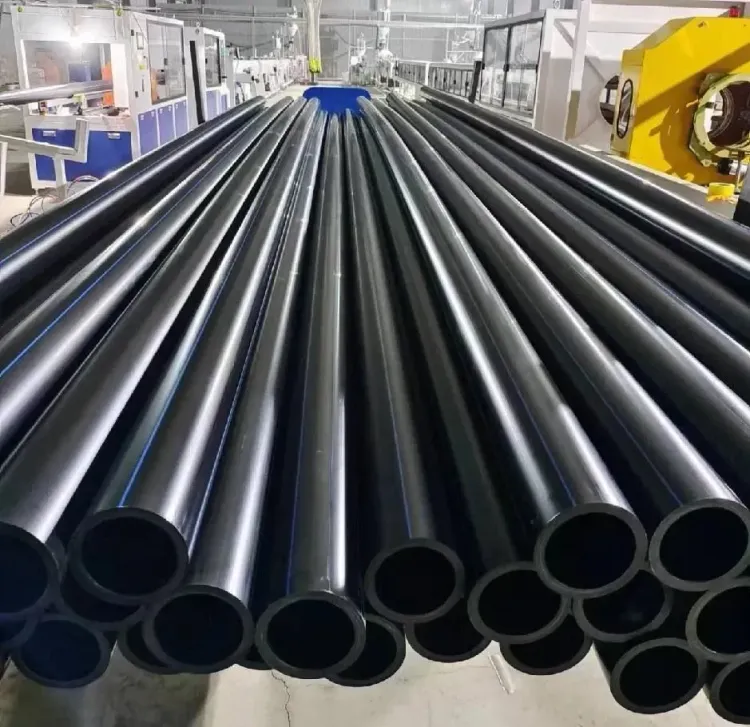
PEI pipes are high-performance thermoplastic pipes made from polyetherimide resin through precision extrusion technology. It is the most technically demanding profile product in the PEI (polyetherimide) family, integrating PEI’s excellent high temperature resistance, high flame retardancy, and electrical insulation with precision fluid channel functionality. It is widely used in high-end fields such as aerospace, medical equipment, semiconductors, and electronics and electrical
Core advantages extraction of PEI pipes:
🔥 Outstanding high temperature resistance: It can be used for a long time at 170 ℃, which is one of the core advantages of PEI
🛡️ Inherent high flame retardancy: UL94 V-0 rating can be achieved without adding flame retardants, with extremely low smoke emission and an oxygen index of up to 47%
🔌 Excellent electrical insulation: able to maintain stable dielectric properties over a wide temperature and frequency range, it is an ideal choice in the field of electronics and electrical engineering
⚙️ Excellent mechanical performance: It has high strength, rigidity, and creep resistance, and can maintain even at high temperatures
🧪 Good chemical and hydrolysis resistance: able to withstand most hydrocarbons, alcohols, and dilute acids, with excellent hydrolysis resistance (maintaining excellent performance after 10000 hours in boiling water)
📏 Excellent dimensional stability: extremely low water absorption, low coefficient of thermal expansion, and minimal deformation after processing
Main application areas of PEI pipes
PEI pipes are widely used in high-tech fields with strict material requirements due to their excellent comprehensive performance
- Aerospace (core applications)
Aircraft cable sheath: protecting critical circuits from high temperatures and flames
Internal structural components of aircraft: seat trays, inner wall panels, portholes, etc
Air/fuel valves: resistant to high temperatures and chemical corrosion
Lightweight structural pipe: replacing metal, significant weight reduction effect - Electronic and electrical (largest application market)
Fiber optic connector: used for optical communication, with good transparency
RF connector insulator: excellent electrical insulation performance
Filter cavity: plastic cavity for base station cavity filter
Semiconductor wafer carrier: high temperature resistance and high cleanliness
Test socket/fixture: stable size, high temperature resistance - Medical devices
Endoscope structural components: can withstand repeated steam sterilization
Surgical instrument handle/tray: resistant to high temperature disinfection, good biocompatibility
Sterilization tray: capable of withstanding high-pressure steam sterilization cycles
Medical tubing: infusion system, ventilator tubing
Laboratory vessels: resistant to chemical corrosion and capable of high-temperature disinfection - Automotive industry
High temperature sensor: engine peripheral temperature sensor
Lamp reflector/connector: high temperature resistance, size stability
Lidar components: sensors for new energy vehicles
Fuel system components: resistant to fuel and chemical corrosion - Fluid Processing and Food Industry
High purity fluid transport system: Ultra pure water pipeline for semiconductor manufacturing
Food processing pipeline: compliant with FDA standards
Water treatment system: resistant to hot water and chemicals
PEI Pipe Processing and Use Instructions
Drying treatment is necessary: PEI has a certain degree of moisture absorption, and it must be dried before processing to reduce the humidity to below 0.02%. Otherwise, bubbles or material degradation may occur during high-temperature processing.
Reasonable control of processing temperature: During extrusion molding, the melt temperature is usually between 340-400 ℃, and temperature uniformity needs to be strictly controlled to ensure the dimensional accuracy of the pipe.
Attention to notch sensitivity: PEI is sensitive to notch stress concentration. When designing pipe joints, threads, and other parts, sharp corners should be avoided and rounded transitions should be used to reduce the risk of stress concentration.
Avoid specific chemicals: Exposure to strong alkaline environments (such as sodium hydroxide) and halogenated hydrocarbon solvents (such as dichloromethane) should be avoided to prevent stress cracking.
Cleaning and disinfection: PEI pipes can be cleaned with methanol, isopropanol, and soap solutions; Capable of withstanding steam sterilization and suitable for medical applications that require repeated disinfection.
Storage requirements: The storage environment should be dry and dark, with a recommended relative humidity of ≤ 60% to prevent moisture absorption from affecting subsequent processing performance