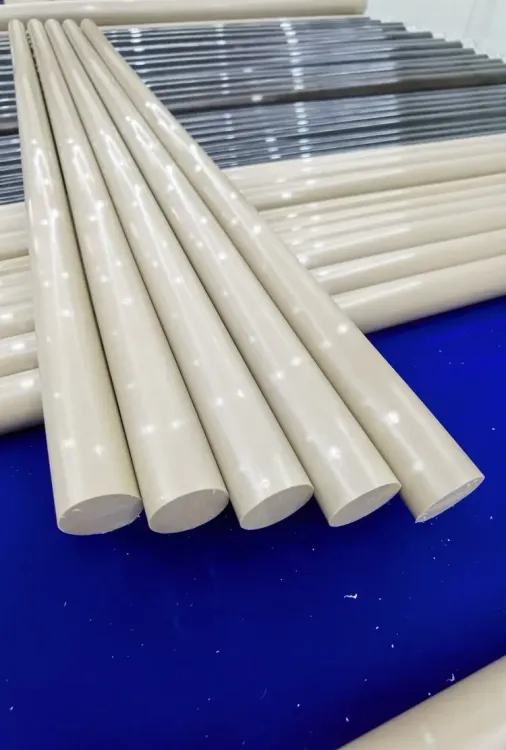
PPS pipe is a high-performance special engineering plastic pipe made by precision extrusion process of polyphenylene sulfide resin. It inherits the excellent high temperature resistance and corrosion resistance of PPS material, and is a lightweight alternative to metal pipes (such as stainless steel and alloy pipes) in harsh environments. It is widely used in chemical transportation, automotive pipelines, and electronic and electrical fields
Extraction of core advantages of PPS pipes:
🔥 High temperature resistance: Long term use temperature can reach up to 220 ℃, far exceeding ordinary plastic pipes (such as PVC, PP), making it an ideal choice to replace metal pipes.
🧪 Top level corrosion resistance: It has extremely high inertness to the vast majority of chemicals, making it particularly suitable for transporting corrosive liquids or gases.
⚙️ High strength and lightweight: After being reinforced with fiberglass, the strength can rival that of metal, but the density is only about 1/5 of metal (about 1.4 g/cm ³), significantly reducing the weight of the system.
📏 Dimensional stability: With extremely low water absorption, it hardly deforms in humid environments, ensuring the sealing and reliability of pipeline connections
PPS pipe processing and usage instructions
High extrusion process requirements: PPS pipe production requires strict temperature control (extrusion section about 300-325 ℃) and vacuum sizing process to prevent material degradation and ensure dimensional accuracy.
Connection method: PPS pipes can be connected using socket bonding, flange connection, or threaded connection. Due to the low surface energy of PPS, special surface treatment (such as plasma treatment) is required before bonding to ensure bonding strength.
Avoid strong oxidants: Although PPS has extremely strong chemical resistance, it should still be avoided from long-term contact with strong oxidizing acids such as concentrated nitric acid and concentrated sulfuric acid.
Pay attention to thermal expansion: PPS has a higher coefficient of linear expansion than metal, and thermal expansion compensation should be considered in long-distance pipeline design (such as using expansion joints or serpentine arrangements).
PPS pipe
Last Page
暂无相关推荐