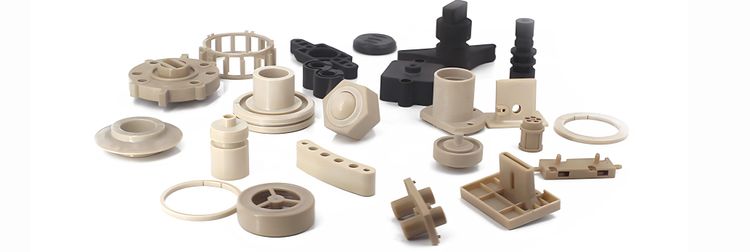
Like PEEK, PPS (polyphenylene sulfide) is also a high-performance specialty engineering plastic. It is often referred to as “plastic gold” and is renowned for its excellent heat resistance, rigidity, and dimensional stability. In many demanding fields, it serves as a powerful complement to PEEK, and its overall cost is usually lower.
Unlike PEEK, the processing of PPS focuses more on injection molding and precision control, with the difficulty mainly lying in the precise adjustment of the process window.
The core of processing PPS lies in utilizing its high fluidity to achieve precision molding, while strictly controlling its crystallization process to ensure stable performance.
Moisture poses a potential risk: PPS has a very low water absorption rate (only 0.02%-0.05%), but to be on the safe side, it is still recommended to dry the material at 150°C for 2-4 hours before molding, especially for materials that have been stored for a long time, to avoid the formation of silver streaks or bubbles on the surface of the product.
Temperature control is crucial for performance: PPS is a crystalline polymer, and its crystallinity (which directly affects the hardness, heat resistance, etc. of the product) is primarily determined by the mold temperature. The mold temperature is generally controlled within the range of 120-170℃, which requires precise control. Too low a mold temperature can lead to incomplete crystallization, potentially resulting in recrystallization during subsequent high-temperature use, causing dimensional changes or exposure of glass fibers.
Liquidity “double-edged sword”: PPS exhibits excellent liquidity, making it suitable for precision injection molding. However, precisely because of this, the venting design of the mold is crucial. If the venting is not smooth, trapped gas can lead to bubbles, scorching, or rough surfaces on the product.
Post-processing cannot be ignored: In order to eliminate internal residual stress and improve dimensional stability, PPS injection molded parts usually require annealing treatment. The general conditions are to treat at 200-240℃ for 2-4 hours, depending on the thickness of the product
PPS Processed parts
Last Page
暂无相关推荐