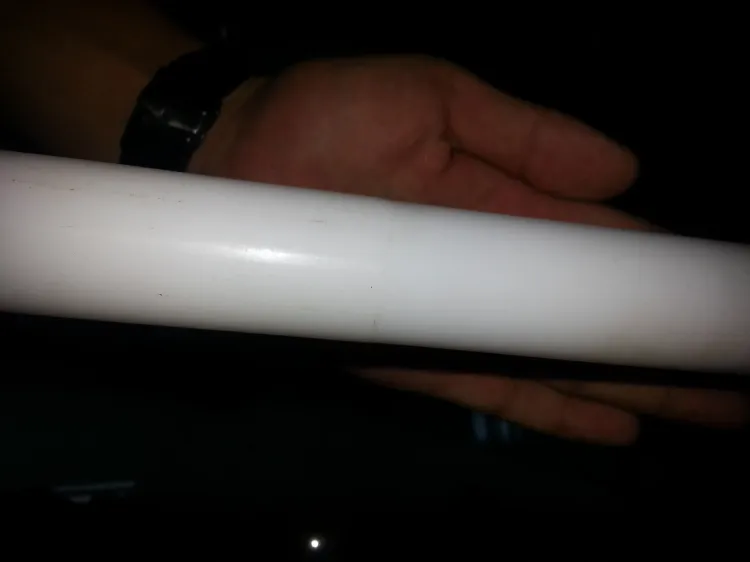
Nylon rods (PolyPA rods) are the most general-purpose profiles, renowned as the exemplary “plastic replacing steel” material due to their outstanding mechanical strength, exceptional wear resistance, and self-lubricating properties. They are typically produced through extrusion or casting processes and serve as key for manufacturing various wear-resistant transmission parts and structural components.
The widespread application of Nylon rods primarily stems from the following characteristics:
⚙️ Excellent mechanical High mechanical strength, rigidity, and toughness, with comprehensive mechanical performance ranking among the top in general-purpose engineering plastics, along with good impact and fatigue resistance.
🛡️ wear and self-lubrication: Low friction coefficient, high wear resistance, and self-lubricating properties, enabling reliable operation even under unlubricated or conditions—ideal for gears, bearings, and other.
🧪 Good chemical resistance: Resistant to most oils, weak acids, alkalis, and organic solvents, commonly used in chemical machinery and automotive parts.
🔇 Vibration damping and noise reduction: High mechanical damping capacity effectively absorbs vibrations and noise, ensuring smoother equipment operation.
⚠️ Key limitation water absorption—this is a critical factor when selecting Nylon materials. Saturated water absorption can reach ~7%, causing dimensional changes (~2%) and reduced strength/rigidity. Thus, caution is required in high-humidity environments or precision applications, or modified materials should be considered.
Primary application areas of Nylon rods:
- Mechanical manufacturing: Widely used for wear-resistant transmission and structural parts like gears, bearings, turbines, lead screws, guidesings, and seals.
- Automotive industry: Components requiring wear resistance and shock absorption, such as engine peripherals, fuel system parts, and seat adjusters.
- Electronics/electrical: Insulating spacers, connectors, coil bobbins, etc.
- Chemical/food industries: Pump bodies, valves, pipelines, and food machinery conveyor screws.
⚠️ Processing and usage notes for Nylon rods:
- Account for water absorption: For high-precision parts, design should allow for expansion due to moisture absorption. For ultra-tight tolerance components, reinforced/modified or lower-hygroscopicity materials (e.g., POM) are recommended.
- Pre-processing: Annealing is advised before precision machining to relieve internal stress and prevent post-processing deformation.
- Lubrication: While self-lubricating, additional lubrication under high-speed/heavy-load conditions significantly extends service life.